Health and Safety Policy for Landscaping Barnes
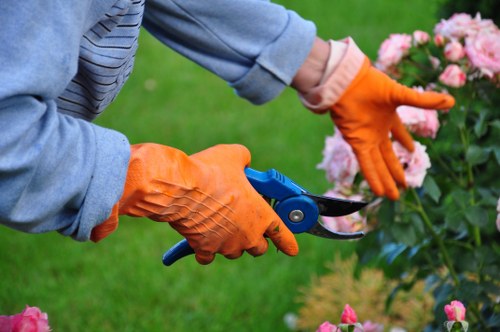 This Health and Safety Policy sets out the standards and responsibilities that support safe, reliable, and professional landscaping operations in Barnes. It applies to all employees, contractors, and supervisors involved in garden maintenance, soft landscaping, planting, turf care, clearance, and related site activities. Our aim is to prevent injury, protect property, and ensure that every task is planned and completed with care.
The policy is based on a simple principle: safety comes first. Landscaping work can involve manual handling, sharp tools, powered equipment, soil movement, working near traffic, and exposure to changing weather. Because of this, every project must begin with an assessment of the work area, the equipment required, and the people carrying out the task. Risks must be identified early and controlled before work starts.
Managers and team leaders are responsible for making sure that safe systems are followed. They must confirm that workers are trained, equipment is suitable, and protective gear is available and used correctly. All staff must take reasonable care of themselves and others, follow instructions, and report hazards or incidents immediately. Health and safety is a shared duty, not a separate activity.
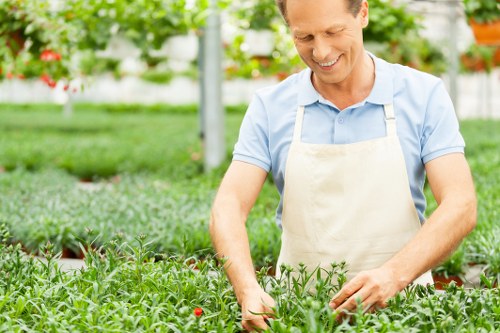 Before any landscaping job begins, a site-specific risk assessment must be completed. This should consider access routes, uneven ground, hidden utilities, overhead hazards, public interaction, slips and trips, and the safe use of vehicles and machinery. Where conditions change during the day, the assessment should be reviewed and updated. No task should continue if the level of risk becomes unacceptable.
Personal protective equipment must be selected according to the work being done. Typical items may include gloves, sturdy footwear, hi-visibility clothing, eye protection, ear protection, and weather-appropriate clothing. PPE should be maintained in good condition and replaced when damaged or no longer suitable. Wearing PPE does not remove the need for safe working practices; it supports them.
Manual handling is a key concern in landscaping Barnes projects. Teams often lift soil bags, paving materials, plants, tools, and waste. To reduce strain and injury, loads should be assessed before lifting, mechanical aids used where practical, and team lifts arranged for heavier items. Workers should be encouraged to use safe posture, avoid twisting, and ask for help when a load is too heavy or awkward.
 The safe operation of tools and machinery is essential. All equipment must be inspected before use, with faults reported and defective items removed from service. Operators must be trained and authorised to use mowers, trimmers, hedge cutters, blowers, and other powered tools. Guards and safety features must not be removed or bypassed. Refuelling and battery charging should be carried out carefully, away from ignition sources and in line with manufacturer instructions.
Housekeeping also plays an important role in preventing accidents. Work areas should be kept tidy, with tools stored properly and waste removed regularly. Cables, hoses, and materials must be positioned to reduce trip hazards. When working on shared or public-facing sites, boundaries and warning signs should be used where needed to keep others away from active work zones. Good housekeeping helps maintain both safety and efficiency.
Weather can affect both worker welfare and operational risk. In hot conditions, staff should have access to drinking water, rest periods, and shade where possible. In cold or wet conditions, suitable clothing and extra care on slippery surfaces are essential. Work plans should allow for changes in light, wind, rain, or frost. If conditions make a task unsafe, it should be paused or rescheduled.
Training, Communication, and Supervision
All workers carrying out landscape maintenance or development tasks must receive relevant induction and ongoing training. This includes safe tool handling, manual handling, emergency procedures, first aid awareness, and understanding site risks. New starters should be closely supervised until they are competent. Supervisors must maintain clear communication throughout the day, especially when teams are split across different parts of a site.
Communication is particularly important when multiple trades or site users are present. Workers should know who is in charge, which areas are active, and what restrictions apply. Where noise, visibility, or distance makes verbal communication difficult, agreed signals or radio procedures should be used. Safety briefings should be short, practical, and repeated whenever the nature of the work changes.
Incident Reporting and Emergency Response
Any accident, near miss, damage, or unsafe condition must be reported as soon as possible. Prompt reporting allows corrective action to be taken and helps prevent repeat incidents. First aid arrangements must be in place, and workers should know how to respond to cuts, strains, eye injuries, falls, or contact with chemicals. Emergency procedures should cover fire, severe weather, serious injury, and loss of control of machinery.
When hazardous substances are used, such as fertilisers, treatments, fuels, or cleaning products, they must be stored, labelled, and handled according to instructions. Exposure should be minimised through careful application, appropriate PPE, and proper washing facilities. Food, drink, and smoking must be kept away from chemical storage and handling areas. Any spill or leak must be contained and managed safely.
 Environmental protection is also part of safe landscaping practice. Waste should be separated and disposed of responsibly, and care should be taken to avoid contamination of soil, drains, and watercourses. Plants, turf, and materials should be handled in a way that reduces unnecessary damage and waste. Safe working and environmental care often go hand in hand, supporting better outcomes for clients and workers alike.
Supervisors must regularly review working methods to ensure this policy remains effective. Changes in equipment, staffing, site conditions, or task type may require new controls. Workers are expected to stop and raise concerns if they believe a task is unsafe. No one should be asked to take avoidable risks in order to finish a job quickly.
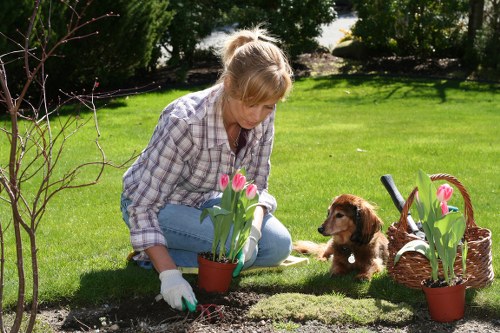 This policy will be reviewed periodically to ensure it continues to reflect current working practices for Landscaping Barnes. Commitment to safety is essential to delivering high-quality results, protecting people, and maintaining a professional standard on every site. By following these principles, the business can support healthy working conditions and consistent, dependable service.
Summary of responsibilities:
- Complete risk assessments before work begins
- Use suitable PPE and maintain it properly
- Train, supervise, and communicate clearly
- Inspect tools and remove faulty equipment
- Report incidents, hazards, and near misses promptly